
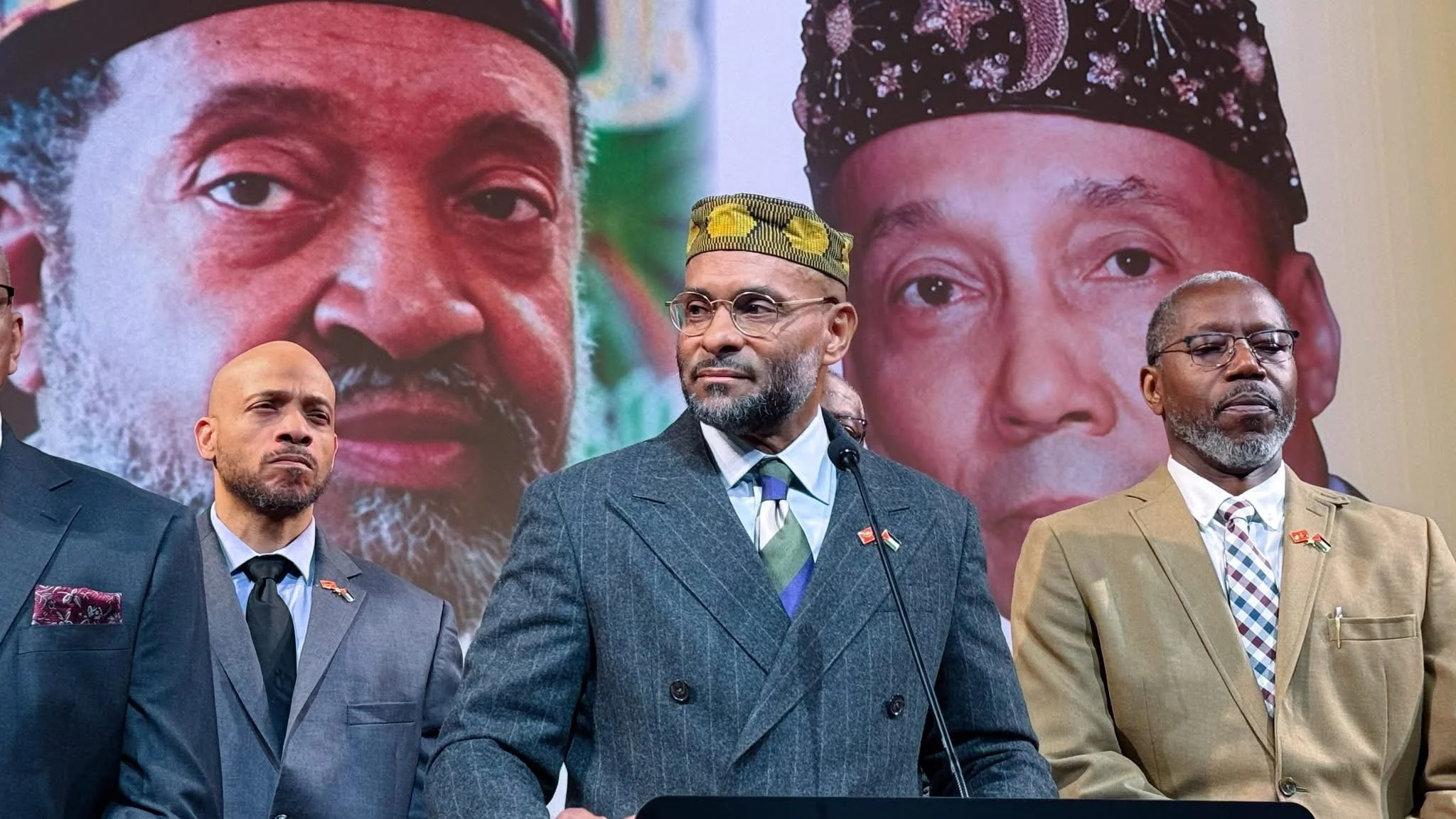
Born and raised in Washington, D.C., Earl Abdulmalik Mohammed embraced the teachings of Islam as an adolescent under Imam W. Deen Mohammed's leadership. In the mid 1980's he qualified for and was recognized as an imam or religious leader, and was asked to lead mosques in Florida, Texas, and Maryland.
By 1990, at 25 years-old, he was appointed Special Assistant and National Representative of Imam W. Deen Mohammed, representing him and the Muslim-American community to national media organizations, on college campuses, and at domestic and international gatherings with noted religious and social organizations and leaders. In a 1999 interview with the Muslim Journal, the elder Mohammed said of him: “He is a valuable leader for our future in America.”
As early as 2010, only two years after W. Deen Mohammed’s passing, there were signs that the major mosques in his following and their leaders, in every city in America, had begun to drift away from the traditional emphasis taught by him for lack of a central public message. Sensing the growing trouble and amid the dramatic world rise of an unprecedented extremism associated with Islam, Earl Abdulmalik Mohammed wrote Democracy, Civic Virtue, and Islam: The Muslim-American Jihad Against Extremism. Published in 2016 to international acclaim, the book expertly countered the narratives and condemned the actions of so-called Muslim extremists as blatantly un-Islamic.
Inspired by the impact of the book and its clear message, a group of respected persons representing many U.S. cities began to coalesce around Mohammed, encouraging his voice of leadership. Within a short period of time this group grew in number and breadth of support. Understanding the necessity for ideological continuity it formally recognized Imam Earl Abdulmalik Mohammed as the successor of Imam W. Deen Mohammed and the next leader of the Muslim-American community.
Over the past several years, Mohammed and his supporters have worked diligently to re-established W. Deen Mohammed’s School of Thought as a trusted resource of insight and intellectual vitality for both Muslim community life commitments and American leadership.
On issues such as immigration, nationalism, economic justice, and the ongoing war in Gaza, Mohammed’s commentary on the role indigenous Muslim leadership serves in this season of trouble and divisiveness for human society has earned worldwide attention and praise for its precise healing and conclusions.
Mohammed has been an invited speaker at Johns Hopkins, Bethune Cookman, and George Washington Universities as well as a participant in USA Today’s 2024 Special Edition: Race in America. In cities across the U.S., his leadership continues to reacquaint America and the world with the tradition of faith and knowledge that has distinguished the spirit of Muslim-African-American life for nearly one hundred years.